
.svg)
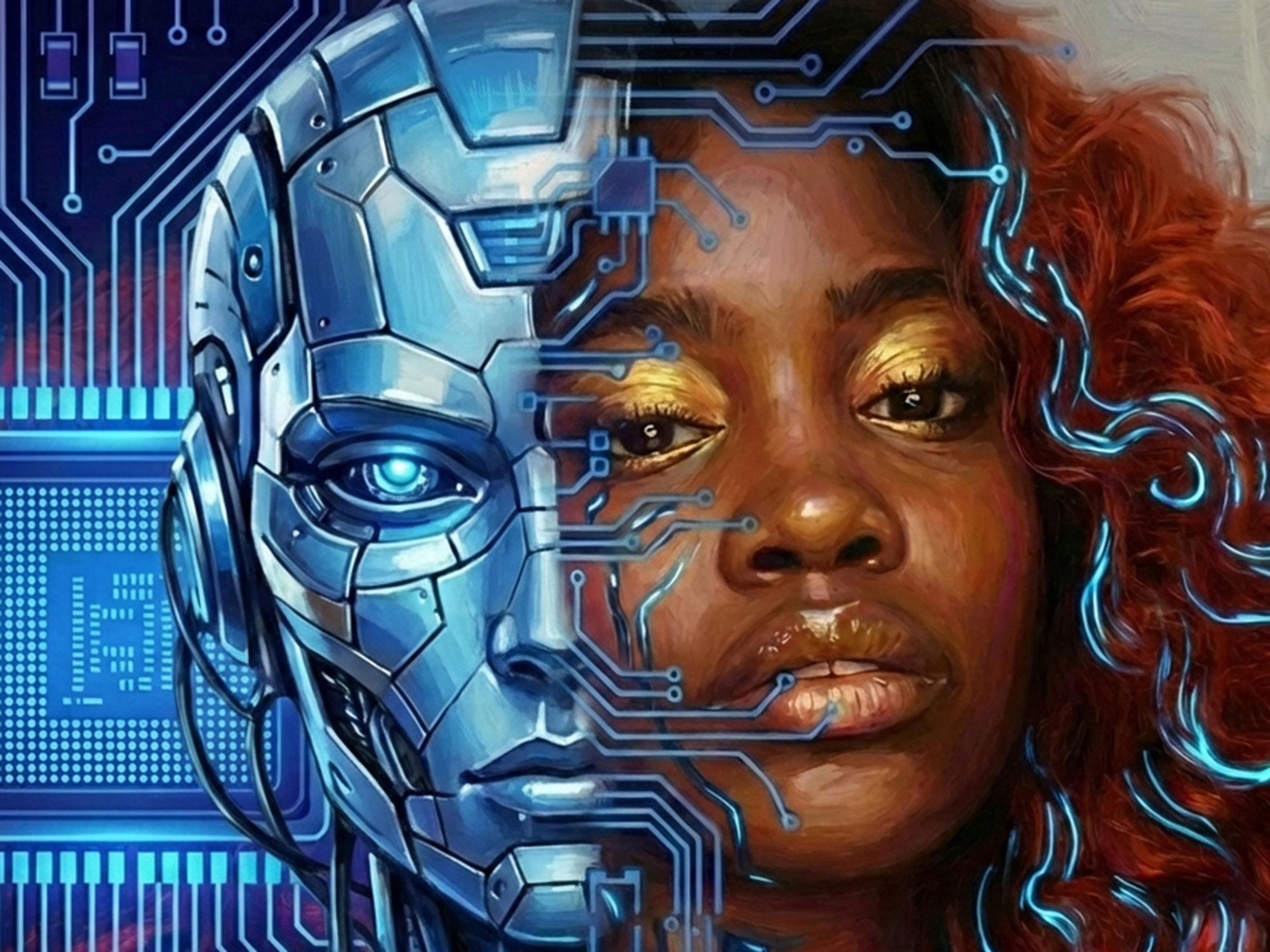
There was a time when “empathetic,” “authentic,” and “sustainable” were signals of a brand that got it. They meant someone had done the work—listened closely, made intentional choices, and showed up with a point of view.
Now? They’re table stakes. Worse, they’re presets.
As more brands lean on AI-generated insights to guide strategy, tone, visuals, and messaging, something subtle—and dangerous—is happening. The outputs are technically correct. The language is warm. The colors are tasteful. The values are aligned. And yet… everything starts to feel the same.
AI is incredible at finding patterns. That’s literally the point. But when everyone uses the same tools, trained on the same data, optimized for the same engagement signals, the result isn’t differentiation—it’s convergence.
You see it everywhere:
This is algorithmic similarity: when brands don’t copy each other directly, but still end up speaking, looking, and feeling indistinguishably alike.
Let’s be clear—AI isn’t the villain here. The risk comes when brands outsource judgment, taste, and tension to an algorithm designed to average the world.
Distinctiveness has never lived in the safest insight. It lives in the edge cases. The quirks. The moments where a brand is willing to be slightly uncomfortable, slightly polarizing, slightly more itself than the data recommends.
People don’t fall in love with brands because they’re optimized.
They do it because they feel something—surprise, delight, recognition, even friction.
Human brands:
That kind of humanity doesn’t come from prompts. It comes from perspective.
At Nichez, our goal isn’t to fight AI or pretend it doesn’t exist. It’s to use it responsibly—and then go far beyond it.
We help brands reclaim their humanity through:
Because in a world where everyone is “authentic,” the most radical move is to be unmistakably yourself.
The future of branding won’t belong to the brands that sound the most empathetic. It will belong to the ones that feel the most human. And humans, thankfully, are still gloriously imperfect.